
Most startup ideas don’t die because they’re bad.
They die because everything takes too long.
I’ve seen it happen over and over. Someone has a solid product idea. Maybe apparel. Maybe fitness gear. Maybe something simple. But before they even sell the first unit, they’re stuck trying to build a “perfect” website, custom software, dashboards, automations… all of it.
Months pass. Money burns. Motivation drops.
That’s where things usually fall apart.
Over the last few years, a lot of startups have quietly changed how they launch — and no-code tools are a big reason why.
Speed Beats Perfection (Especially Early On)
If you’re a startup, your first job isn’t to build the cleanest system.
It’s to find out if people actually care.
That means:
- Getting something live
- Letting real users interact with it
- Fixing what breaks
- Improving what matters
Waiting half a year for a fully custom-built platform rarely makes sense at this stage. Most founders don’t need that much complexity early on — they just think they do.
What No-Code Really Means (No Buzzwords)
No-code isn’t magic. It’s not “one click and you’re done.”
It just means you’re not writing everything from scratch.
Instead of developers hard-coding every feature, you visually build things using tools designed for speed. You connect blocks. You define logic. You test. You adjust.
Platforms like FlutterFlow, Bubble, Make, and Xano are popular because they let small teams build real, usable systems without a full engineering department.
Not prototypes. Actual working products.
How DTC Brands Use No-Code in Real Life
For direct-to-consumer brands, no-code usually shows up in very practical ways.
Websites and Landing Pages
Founders launch:
- Simple product pages
- Waitlists
- Email capture pages
- Early access drops
Not fancy. Just enough to start conversations with customers.
Order and Customer Management
Instead of juggling spreadsheets, brands use no-code tools to:
- Track orders
- Manage customer data
- Handle basic inventory logic
- See what’s actually selling
This alone saves a ridiculous amount of time.
Automations That Reduce Headaches
Simple automations go a long way:
- Order confirmations
- Internal alerts
- Email flows
- CRM updates
Nothing glamorous. Just fewer things slipping through the cracks.
The Part No-Code Doesn’t Fix
Here’s the part people don’t talk about enough.
You can automate everything online — but you still need to actually make the product.
And that’s where a lot of DTC startups struggle.
Especially in clothing and sportswear.
You can’t fake manufacturing. You can’t duct-tape production. And bad suppliers will cost you more than slow software ever will.
Why Manufacturing Partners Matter More Than Most Founders Think
Early-stage brands don’t need factories that only care about huge volumes.
They need partners who:
- Accept small runs
- Communicate clearly
- Help when things aren’t perfect
- Understand first-time founders
That’s why many startups work with manufacturers who specialize in small brands rather than large retail-focused factories.
For example, companies like Wears For You focus on helping startups move from idea to product without forcing massive upfront orders. Sampling, private labeling, low MOQs — all of that matters when you’re still figuring things out.
The goal isn’t to scale overnight. It’s to launch without breaking yourself financially.
Why No-Code + the Right Manufacturer Actually Works
When you combine fast digital tools with a realistic production setup, things feel different.
You’re not stuck waiting.
You’re not guessing blindly.
You’re not locked into huge commitments.
You test digitally.
You test physically.
You improve both sides together.
That’s how lean brands stay alive long enough to grow.
How Smart Startups Are Actually Launching Today
A pattern shows up again and again:
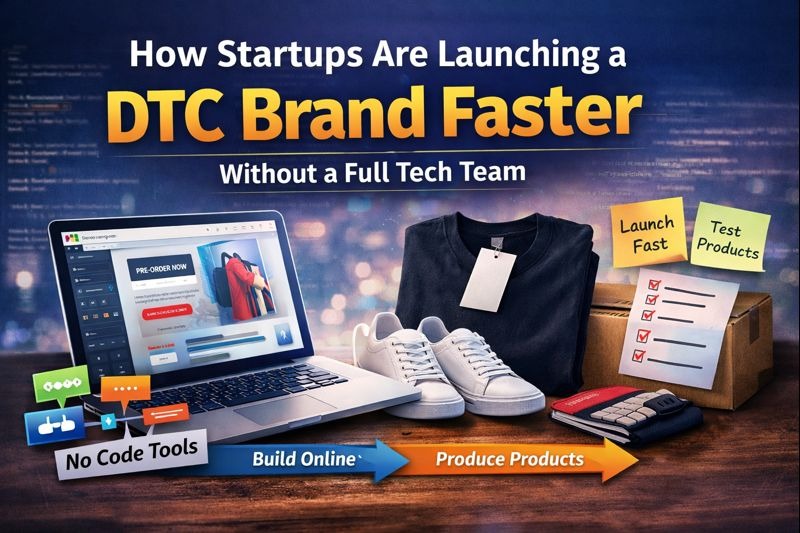
- Launch a simple site using no-code
- Collect interest or pre-orders
- Produce a small batch
- Learn from real customers
- Adjust the next drop
Nothing flashy. Just steady progress.
This approach avoids the classic mistake of going all-in before knowing what really works.
Mistakes I See All the Time
Even with good tools, founders still trip over the same things:
- Overbuilding features nobody asked for
- Choosing manufacturers that don’t support small brands
- Ignoring timelines and hidden costs
- Trying to scale before the first product is proven
Tools help, but decisions still matter.
Final Thoughts
No-code tools didn’t replace hard work.
They just removed a lot of unnecessary friction.
For DTC brands, especially in apparel, the real win comes from balance:
- Move fast digitally
- Stay realistic physically
- Work with partners who actually support growth
When those pieces line up, launching a brand doesn’t feel impossible anymore. It feels manageable.
And that’s usually the difference between ideas that stay ideas — and brands that actually make it to market.
